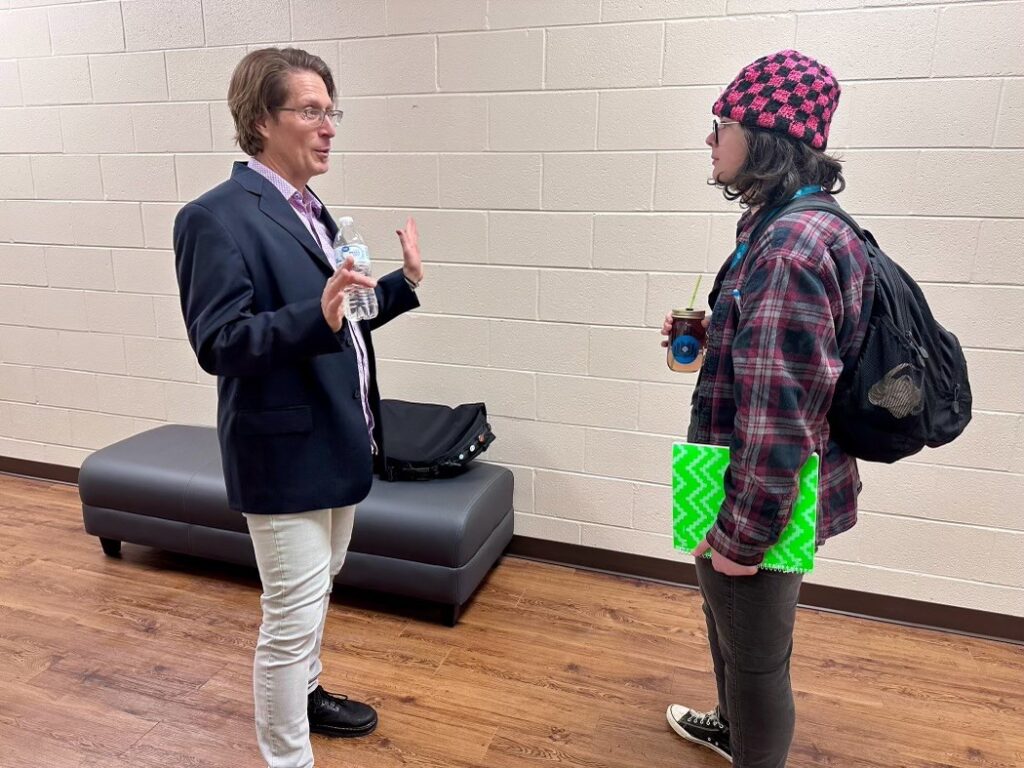
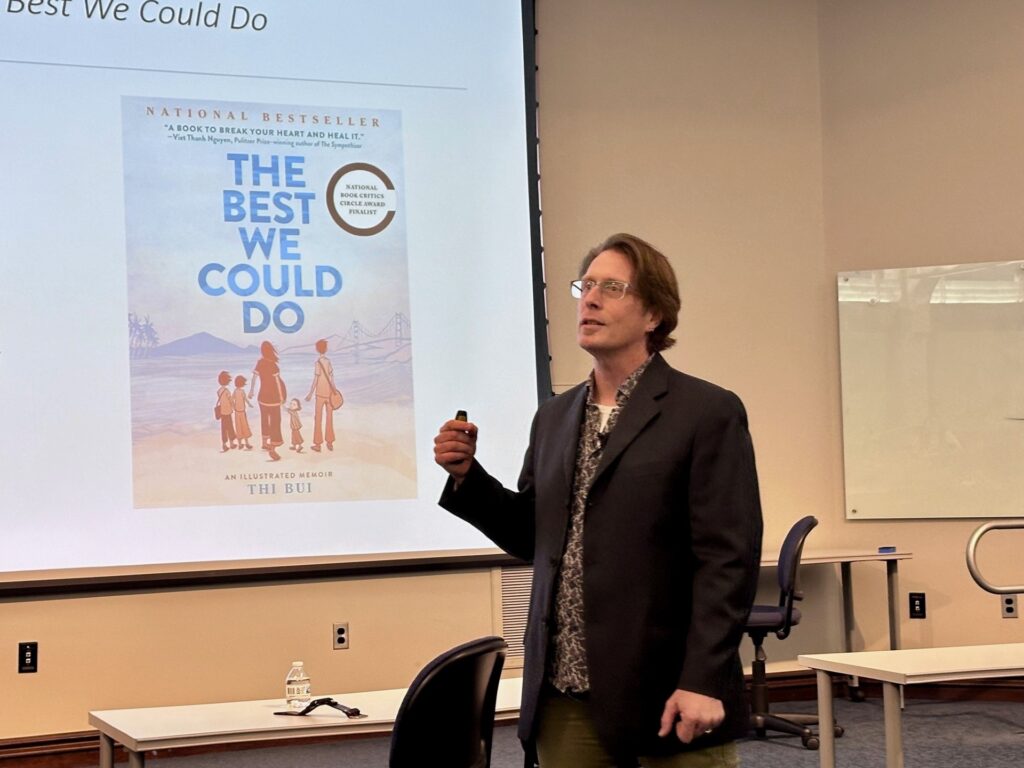
Recently, Dr. Terrance Wandtke stopped by the Calhoun campus on Huntsville to deliver a brief lecture on comics in honor of our Common Read program selecting Thi Bui’s The Best We Could Do as its book for the year. He delved into the past, present, and overall structure of comics and graphic novels.
Since we were discussing The Best We Could Do, the first topic Dr. Wandtke covered was the differences between biographies, autobiographies, and memoirs. He defined them as such:
Biographies are a detailed account of a real person’s life story. The person in question is usually historically or culturally significant in some way.
Autobiographies are self-written biographies. In an autobiography, the author is in the unique position of being both the narrator of the story and a character within the story.
Memoirs are biographies or autobiographies situated within a larger historical or cultural context. In the case of The Best We Could Do, Thi Bui’s life story is contextualized by her family’s experience with the Vietnam War and French colonialism.
We then moved on to different types of body text used in the comics medium as a whole. Dr. Wandtke separated them into three main categories: speech bubbles, thought bubbles, and narration boxes. Loosely, he described them as follows:
Speech bubbles are simply dialogue from a character speaking. Thought bubbles represent a character’s internal thoughts. Both of these are almost always diegetic (occurring within the world of the comic).
Narration boxes are used to relay information to the audience. The narration can be provided by a character within the story, or the narrator can be a completely separate entity. These are usually non-diegetic (occurring solely for the benefit of the audience, not directly observable within the world of the comic).
Each of these are somewhat unique to the medium of comics, as they are all formatted differently from the body text usually seen in novels or short stories. Thought bubbles are especially interesting, as they can provide a shortcut to show what multiple characters are thinking, without having to switch character perspectives like in a conventional written story.
Dr. Wandtke ended with some thoughts on the modern comics climate. He noted, among other things, that:
Comic book movies now take precedence over comics when it comes to the general public, largely due to Marvel’s influence in the film industry.
Comics are now reaching a wider audience than ever before in terms of gender, ethnicity, background, and even age. This expansion, in turn, leads to people being inspired to create comics from more diverse perspectives– such as The Best We Could Do.
There is also far greater diversity in genre, with superhero comics still taking the lead but no longer being the only genre found in most comic book stores. Foreign influences have also begun to inspire American comics, with elements usually seen in Asian and European comics now being incorporated.
The cultural shift in attitudes towards comics has led to them being taken much more seriously over the past few decades. Dr. Wandtke pointed out that it’s much more common now for literature publishers to publish comics, rather than being sequestered to their own publishing companies. There are differing opinions on this shift within the comics community, with some appreciating the legitimacy and others scared of erasure.