
Little did we know in 1993, when the first smart phone came out, what an incredible impact it would have on our society. In later years, it would influence our communications skills, or lack thereof, and the harmful effect on the written word.
Textese, as it is referred to, “is the process of dropping letters and shortening words and using abbreviations” as referred to in a 2011 study by James G. Muhammad. This study was conducted at Governors State University on ninth and twelfth grade students.
The first use of cell phones in the United States was for voice oriented communication rather than written communication. In Europe, it was used as a way to communicate across the continent, while in Israel, it was used as a money saving idea, because text communication prices were based on the number of characters and calls.
Muhammad said, “Over the years the use of cell phones have changed from voice communication to text communication and this has affected spelling and grammar.” Text language has taken on the sound approach to spelling words rather than the whole or traditional rote approach.
“Texting has a direct bearing on spelling and children’s ability when performing formal written and communication skills. There was a wide discrepancy between ninth and twelfth grader performance with the widest learning gap in the ninth grade.”
Textese in professional writing is a “wake up call” because students often use the process when writing formal papers and in formal communications. Students were asked if they would use textese in formal writing and they said, “No” but despite that, they continued to use it. There seemed to be no transferring of skills between textese and formal grammar.
Texting raises an old debate as to whether words should be shortened and Benjamin Franklin proposed a simple form of spelling to Noah Webster that found its way in the Webster Dictionary.
William Shakespeare spelled his name several different ways which was referred to as free spelling. Some shortened version of words have found their way into the dictionary such as, “laughing out loud (LOL), and oh my god (OMG).”
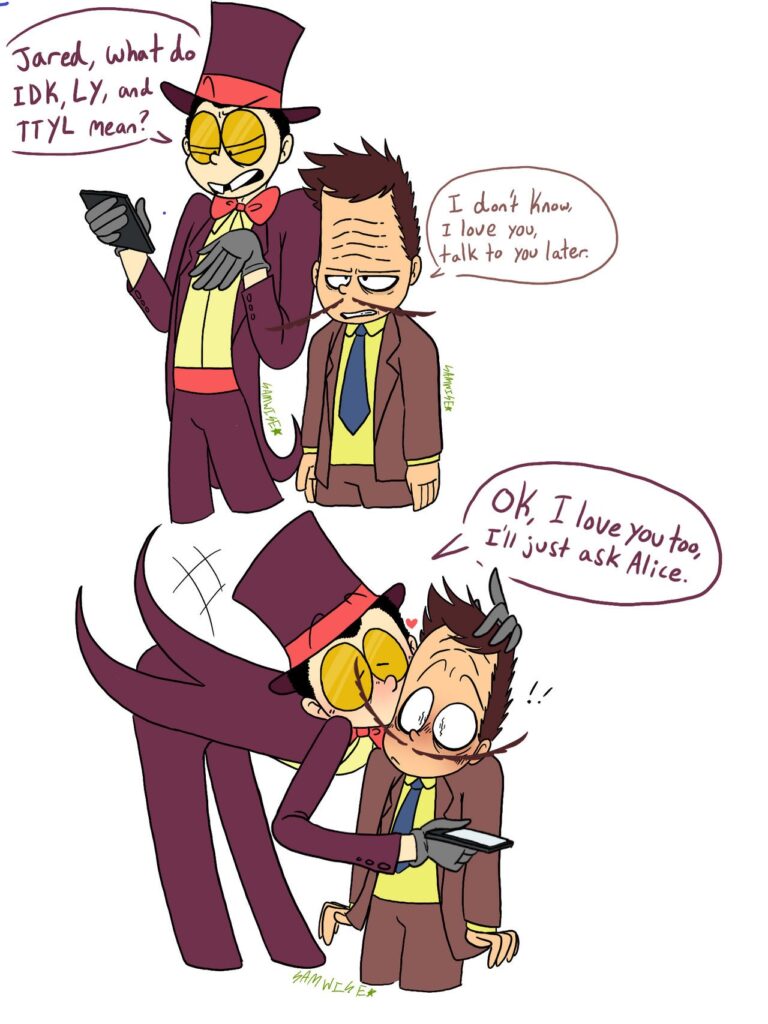
Muhammad said, “Textese, or generated text, can still be a beneficial tool, whereby instructors can help older spellers who have depressed grammar skills and develop them.” Instructors can identify the level of the student’s phonological awareness (ability to recognize and work with sounds in spoken language) and target this deficiency.
As a classroom teacher, I do agree with Muhammad to a point, textese does have a legitimate place in the classroom. One prime example is storytelling. Often students’ story telling skills are excellent, but their spelling skills are lacking. Do we stifle one skill to develop the other? No, there has to be a balance between the two. One-on-one teaching is vital in this process with aiding the student to become efficient in both storytelling and writing.
This study has shown that texting in the United States is beginning with younger children because of video games, but overall, as a teacher of elementary students, I see textese as detrimental to young spellers. Their cognitive development is not to the point where they are able to distinguish or go back and forth between textese and correct spelling.
At some point textese, or generated spelling, is going to have to be addressed. There are rules of grammar that governs our formal writing. Our writing and speaking to others is not contained in a vacuum. The means by which we reach others in the world is connected through technology and that range is growing smaller and smaller daily.
Having the ability to communicate in a formal fashion produces professionalism and our intent to convey the seriousness of our conversations. It allows others to see qualities that we are trying to present without ever seeing us face to face. Our thoughts go out into the world on the World Wide Web and they can never be recalled.
.